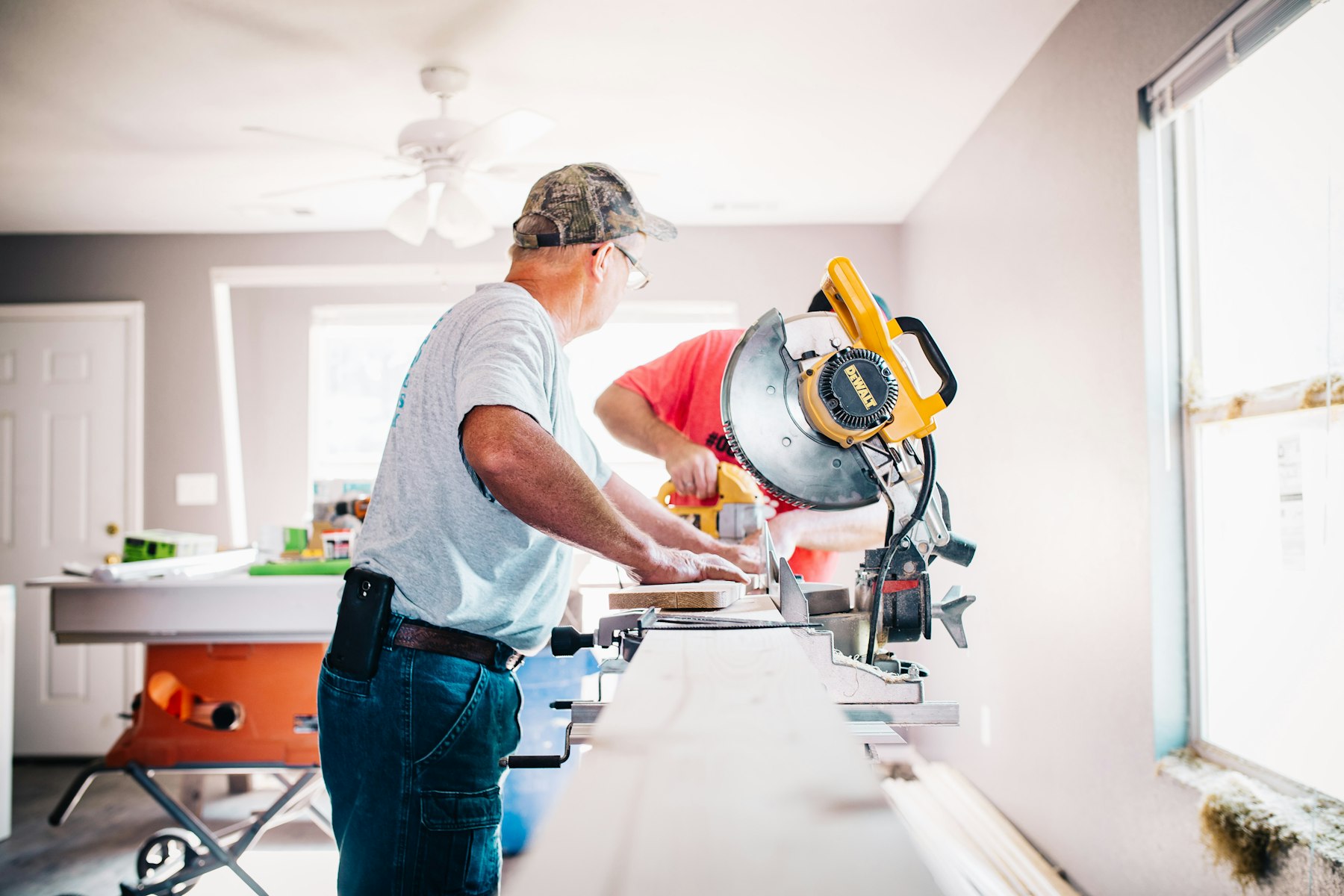
A homeowner in Jenks finishing out a basement, replacing builder-grade baseboard, or adding custom shelving around a fireplace has to search for someone to do that work, and in Tulsa County, that search runs into a noticeably thinner field of finish carpenters than most other trades. That's not a guess. It's what two independent public datasets say when you put them side by side. Jenks itself has spent the last several years as one of the faster-growing suburbs in the metro, with new-construction neighborhoods around the Riverwalk corridor and infill projects closer to downtown, the kind of growth that reliably produces trim, built-in, and cabinetry work long after the framing crews move on.
The Establishment Count Is Genuinely Low
Tulsa County had 56 finish carpentry establishments as of 2026, according to BLS QCEW employment data, the same five years of establishment counts and wage data I pulled and checked trade by trade across the county. Fifty-six is a small number relative to trades like electrical contractors (267) or plumbing and HVAC (337). Raw counts alone don't prove much on their own, since some trades naturally need fewer businesses to serve the same population. That's where the location quotient comes in.
The Location Quotient Says the Same Thing a Different Way
A location quotient compares a trade's local concentration to its national average concentration: a value of 1.0 means Tulsa County has exactly as many finish carpentry businesses per capita as the U.S. as a whole. Finish carpentry sits at 0.80, meaningfully under 1.0. The BLS's own QCEW program, which is where this number comes from, exists specifically to make county-by-county industry comparisons like this possible. A 0.80 location quotient doesn't mean the trade is dying locally. It means the county has fewer of these businesses than its population would typically support.
Search Demand Isn't Guessing Either
The establishment count and location quotient both come from business data. The other half of this comes from a completely different source: five years of Google Trends search interest for "carpenter," measured weekly across the Tulsa media market. That search interest index sits at 19.2 on Google's 0-100 relative scale: a real, sustained volume of people searching, not a one-time spike. Cross-referencing that search data against the same BLS establishment counts produces an interest-per-establishment ratio: divide the search index by the number of businesses, and you get a rough sense of how much demand exists per business already positioned to catch it.
0.343 Is the Second-Highest Ratio In the Whole Dataset
Finish carpentry's interest-per-establishment ratio is 0.343: second only to car washes at 0.793, and well ahead of every other trade tracked, including pest control (0.278), roofing (0.257), and electricians (0.038). Two independent datasets, built from different methodologies and different agencies, are pointing at the same conclusion: real, sustained search demand paired with comparatively few businesses positioned to answer it. That's a genuinely different situation than the usual "there's always room for one more contractor" pitch: the location quotient and the interest ratio arrived at the same read from unrelated data.
Underserved Doesn't Mean Uncontested
Here's the part that matters if you're the one deciding whether to act on this. A thin field of competitors and real search demand is a genuine opportunity, but it's not a market where showing up eventually is good enough.
With only 56 businesses countywide, whoever builds real trust signals first: a documented service area that actually names Jenks and the surrounding suburbs, an honest before-and-after portfolio of finished rooms and trim work, and a review history that's specific and current, captures a disproportionate share of that search volume before a competitor gets around to it. This is a "show up credibly, fast" market, not a "just show up" one. Building that kind of visible, specific presence in local search is exactly the gap local SEO work is built to close.
In practice, that means the basics matter more here than they would in a crowded trade. A finish carpenter working out of Jenks who has a Google Business Profile actually set as a service-area business, project photos organized by the kind of work (trim, built-ins, stair parts, cabinetry), and a small but steady flow of new reviews mentioning the neighborhood is doing more to capture that 0.343 ratio than any amount of ad spend alone would. The demand is documented and real; it just hasn't been claimed by very many businesses yet.
- The location quotient (0.80) shows fewer finish carpentry businesses per capita in Tulsa County than the national average.
- The interest-per-establishment ratio (0.343) independently confirms real search demand relative to that thin field, second only to car washes.
- The opening won't stay open passively, it favors whoever documents their service area and proof of work first, not whoever simply exists longest.