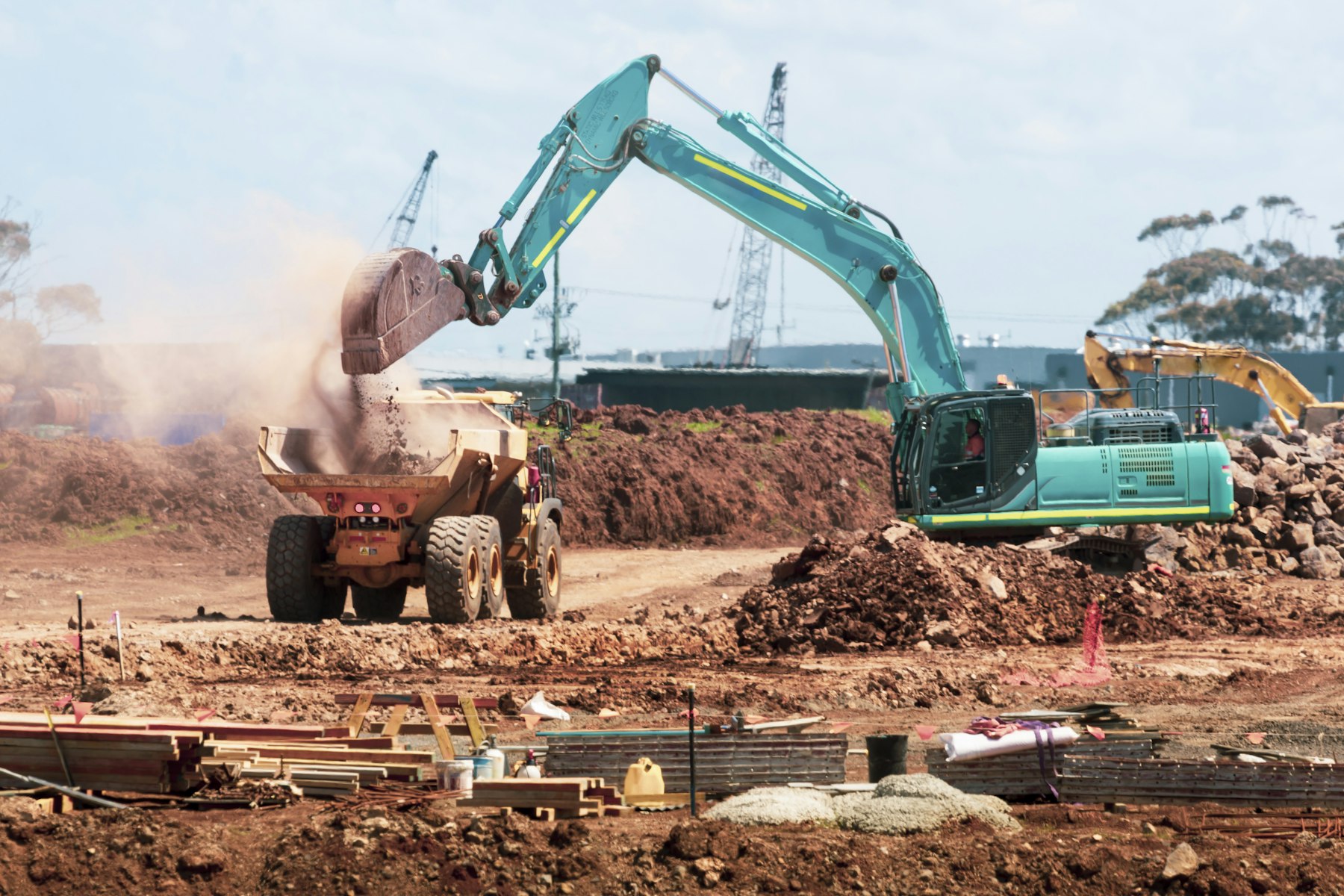
A site prep contractor working new-build lots in Bixby asked me why his Google Ads account kept burning budget without producing calls. The account itself wasn't the problem: tight radius, reasonable bids, a real landing page, all the basics done right. The problem is that almost nobody in Tulsa County searches for what he does. Not "not many people." Almost nobody, measurably.
A Search Interest Index That Rounds To Zero
Pulling five years of Google Trends data for all 15 trades I track, excavation contractor comes back with a search interest index of 0.0. Every other trade in the dataset registers some measurable search volume, even the smaller ones. Excavation contractor is the only one that rounds all the way down to zero across the entire five-year window. That's not a seasonal dip or a slow quarter. It's a flat line.
The Most Under-Represented Trade In The County
The BLS employment side of the picture tells the same story from a different angle. Site preparation contractors carry a location quotient of 0.44 in Tulsa County for 2026: a measure of how concentrated a trade's local employment is compared to its share of the national economy. A location quotient of 1.0 means the trade is represented locally about the same as it is nationally; anything meaningfully below that means the trade is thinner here than the national baseline would predict.
At 0.44, this is the single most under-represented trade of all 15 I track, and the only one anywhere below 0.5, sitting on top of just 40 tracked establishments countywide. Run the search-interest number against the establishment count and you get an interest-per-establishment ratio of 0.001: effectively the floor of the entire dataset.
Even The Metro-Wide Government Numbers Go Quiet
Here's the part I didn't expect going in. Every one of the 15 trades in this study came back fully disclosed at the Tulsa County level: 21 out of 21 quarters, no exceptions. At the broader seven-county Tulsa metro level, though, site preparation contractors were the one trade with zero of 21 quarters usable, worse than every other trade in the study.
The most likely cause, per BLS's own disclosure rules, is complementary suppression: when a trade's numbers in one of the metro's smaller outlying counties get small enough that publishing the full metro total would let someone back into that county's hidden figure, so the whole metro-level cell gets suppressed instead. That's a data-methodology artifact, not proof the industry vanished.
But it's a fitting one: a trade small and concentrated enough to trip a suppression rule at the metro level is the same kind of trade that shows up nowhere in a consumer search index either. Both numbers point the same direction. You can read how that suppression works directly from BLS in their own Quarterly Census of Employment and Wages program documentation, the source this whole comparison is pulled from.
Your Customer Isn't The Person Googling This
Put the three numbers together and there's really one honest read: site prep and excavation work in Tulsa County is booked almost entirely through builders, developers, and general contractors, not through a homeowner typing a search into Google. Bixby makes the point sharper, not softer. It's one of the fastest-growing suburbs in the metro, and most of that growth is whole subdivisions going in at once. The excavation sub on a project like that gets picked before a single future homeowner exists to search for anything. The deal is closed between a developer and a contractor they already trust, usually well before the first lot is staked.
That changes where the marketing dollars belong. A paid search campaign built around "excavation contractor Bixby" or "site prep near me" is bidding for an audience that mostly isn't searching, on a term with a search interest index that already rounds to zero. The channel isn't broken. It's aimed at the wrong buyer. The lead-generation work that actually earns its keep here looks less like a landing page waiting on organic or paid search traffic and more like a direct-outreach and referral pipeline aimed at the builders and GCs already staffing Bixby's subdivisions, a simple way for a GC who already needs a sub to find you fast, plus a system for tracking which relationships are actually turning into bid invitations.
- The data agrees at every level. Zero search interest, the lowest location quotient in the dataset, and zero usable metro-level quarters all point to the same conclusion.
- Bixby's growth pattern confirms it. Subdivision-scale development gets awarded to a trusted sub, not found through a search bar.
- Spend where the buyer actually is. Relationship-building with developers and GCs will outperform a paid search account here almost every time.